Introduction
Powerball has become a global symbol of extreme lottery wealth. When jackpots climb into the hundreds of millions or even billions, news headlines explode, social media fills with excitement, and people who rarely buy lottery tickets suddenly join the rush. But behind the dazzling numbers and overnight millionaire stories lies a carefully structured system that many players do not fully understand.
This article explains how Powerball jackpots really work, from ticket sales and prize pools to rollovers, payouts, and why the jackpots grow so large. If you have ever wondered how Powerball creates the biggest lottery prizes in the world, this guide breaks it all down in clear and simple terms.
What Is Powerball?

Powerball is a multi-state lottery game played across most of the United States. It is operated by the Multi-State Lottery Association, with each participating state contributing to the overall prize pool.
What makes Powerball unique is its ability to generate enormous jackpots that continue growing until someone wins the top prize. This rollover system is the key reason Powerball jackpots dominate global lottery records.
Basic Structure of the Powerball Game
To understand how the jackpots work, you must first understand the game format.
How Players Enter
-
Players select five numbers from 1 to 69
-
Players select one Powerball number from 1 to 26
-
Drawings are held three times a week
-
Tickets are sold through authorized retailers
Winning the jackpot requires matching all six numbers exactly.
Where Powerball Jackpot Money Comes From
Many players assume all ticket money goes directly into the jackpot. This is not true.
Ticket Revenue Distribution
Each Powerball ticket contributes money to several areas:
-
Jackpot prize pool
-
Lower-tier prizes
-
State programs and public funding
-
Operating costs and commissions
Only a portion of each ticket goes toward the jackpot itself. The rest supports education, infrastructure, and other state initiatives.
How Powerball Jackpots Grow So Large
The defining feature of Powerball is its rollover system.
What Is a Rollover?
If no ticket matches all six numbers in a drawing, the jackpot does not disappear. Instead, it rolls over into the next draw and grows larger as more tickets are sold.
This process continues until someone wins the jackpot.
Why Rollovers Create Massive Jackpots
-
Drawings occur frequently
-
Millions of tickets are sold each draw
-
Odds of winning are extremely low
-
Multiple rollovers compound ticket revenue
When rollovers happen for weeks or months, jackpots can reach record-breaking levels.
The Role of Odds in Jackpot Size
Powerball jackpot odds are approximately 1 in 292 million. These long odds are intentional.
Lower odds mean fewer winners, which allows jackpots to roll over more often. This design directly fuels the creation of enormous prize amounts.
Large jackpots are not accidents. They are the result of mathematical design.
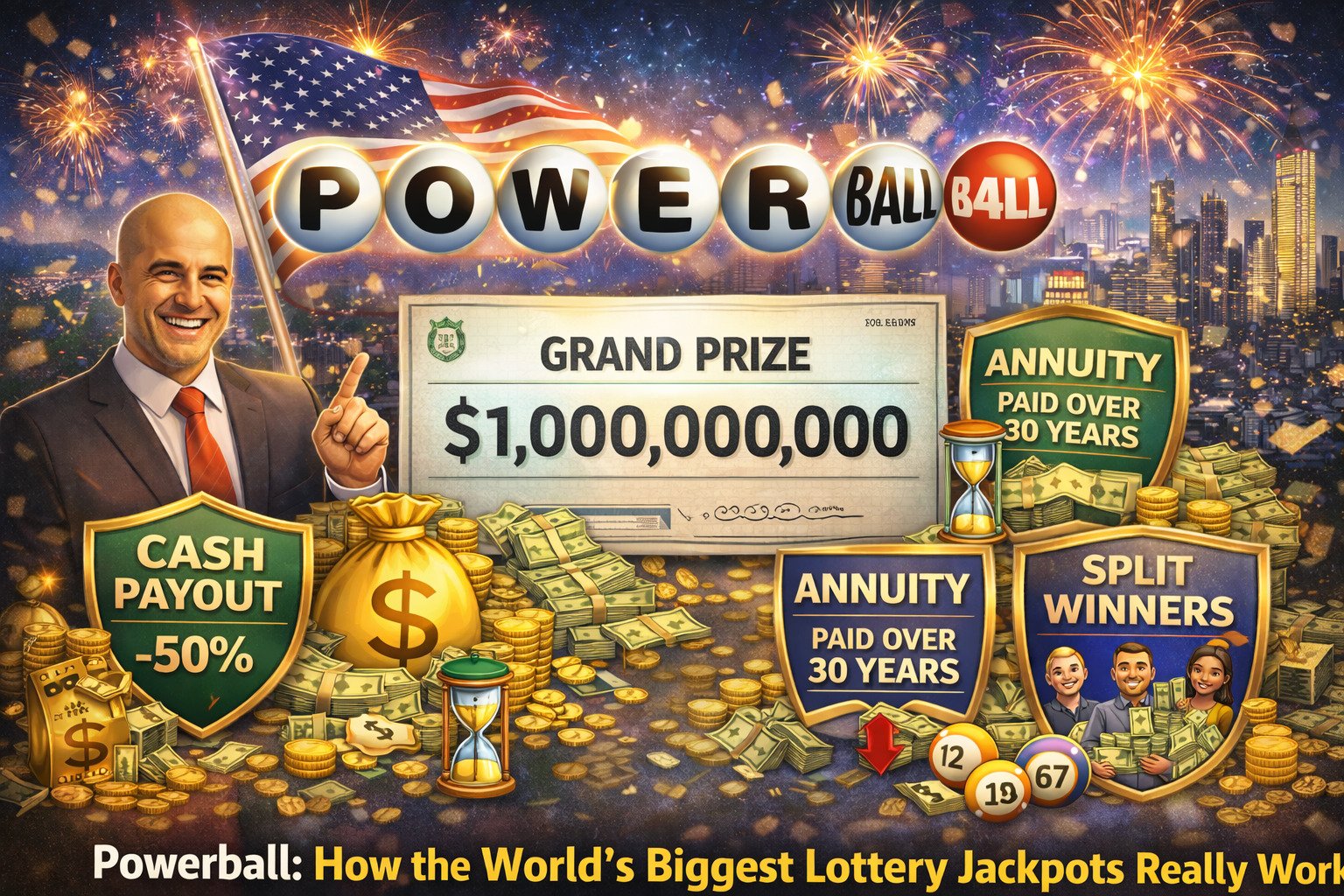
Lump Sum vs Annuity Explained
When someone wins a Powerball jackpot, they are offered two payout options.
Lump Sum Option
-
One immediate payment
-
Lower total value than advertised jackpot
-
Winner receives money upfront
-
Often chosen by most winners
Annuity Option
-
Paid over approximately 30 years
-
Annual payments increase over time
-
Total equals advertised jackpot amount
-
Subject to long-term tax and inflation effects
The advertised jackpot number refers to the annuity value, not the lump sum.
Why Advertised Jackpots Look So Huge
When you see a Powerball jackpot advertised at $800 million or $1 billion, that figure represents the total annuity payout over decades.
The actual cash value is significantly lower, sometimes by hundreds of millions. This distinction is often misunderstood by players.
Taxes and Powerball Winnings
Powerball winnings are subject to taxation.
What Winners Pay
-
Federal income tax
-
State tax depending on location
-
Taxes apply to both lump sum and annuity payments
This means the final amount a winner keeps is always less than the headline jackpot.
Powerball and Public Funding
One reason Powerball exists is to support public programs.
Each participating state uses lottery revenue differently, but common funding areas include:
-
Education
-
Infrastructure
-
Public welfare programs
-
Environmental conservation
Playing Powerball contributes to state funding even when players do not win.
Why Powerball Jackpots Capture Global Attention
Powerball jackpots often make international news, even outside the United States.
Reasons for Global Fascination
-
Jackpot sizes exceed most global lotteries
-
Stories of overnight wealth are compelling
-
Media coverage amplifies excitement
-
Rare billion-dollar milestones
Powerball has become more than a lottery. It is a cultural phenomenon.
Powerball vs Other World Lotteries
Compared to other major lotteries, Powerball stands out in several ways.
Key Differences
-
Larger number pools
-
Lower odds of winning
-
Higher jackpot potential
-
Slower jackpot wins
Many international lotteries offer better odds but much smaller top prizes.
Are Big Jackpots Better for Players?
Large jackpots increase excitement, but they also increase competition.
When jackpots grow:
-
More people buy tickets
-
Odds remain unchanged
-
Chance of sharing the prize increases
Big jackpots benefit lottery organizers and public funding more than individual players.
Common Myths About Powerball Jackpots
Myth 1: Big Jackpots Mean Better Chances
Jackpot size does not affect odds.
Myth 2: Certain Numbers Appear More Often
All combinations have equal probability.
Myth 3: Quick Picks Are Less Effective
Quick Picks and manual selections have identical odds.
Is Powerball Designed to Be Won?
Yes, but rarely.
Powerball is designed so jackpots are eventually won, but not too frequently. This balance keeps public interest high while maintaining sustainability.
For general information about Powerball history and structure, you can visit this high-authority resource:
https://en.wikipedia.org/wiki/Powerball
Smart Perspective for Powerball Players
Understanding how Powerball jackpots work helps players approach the game responsibly.
Healthy Mindset Tips
-
Treat tickets as entertainment
-
Never rely on lottery income
-
Set strict spending limits
-
Enjoy the excitement without expectation
The real value of Powerball lies in the experience, not the expectation.
Final Thoughts
Powerball jackpots are not random miracles. They are the result of deliberate design, mathematical probability, and massive participation. The combination of low odds, frequent rollovers, and high ticket sales creates the largest lottery prizes in the world.
By understanding how Powerball jackpots really work, players can enjoy the game with clarity and realistic expectations. Powerball is a dream machine powered by numbers, psychology, and hope.
Frequently Asked Questions
Why are Powerball jackpots so large?
Because of rollovers, low odds, and massive ticket sales.
Does jackpot size change winning odds?
No, odds remain the same regardless of jackpot size.
Why is the lump sum lower than advertised?
The advertised amount reflects long-term annuity payments.
Are Powerball jackpots taxed?
Yes, federal and often state taxes apply.
Is Powerball the biggest lottery in the world?
Yes, it regularly produces the largest jackpots globally.