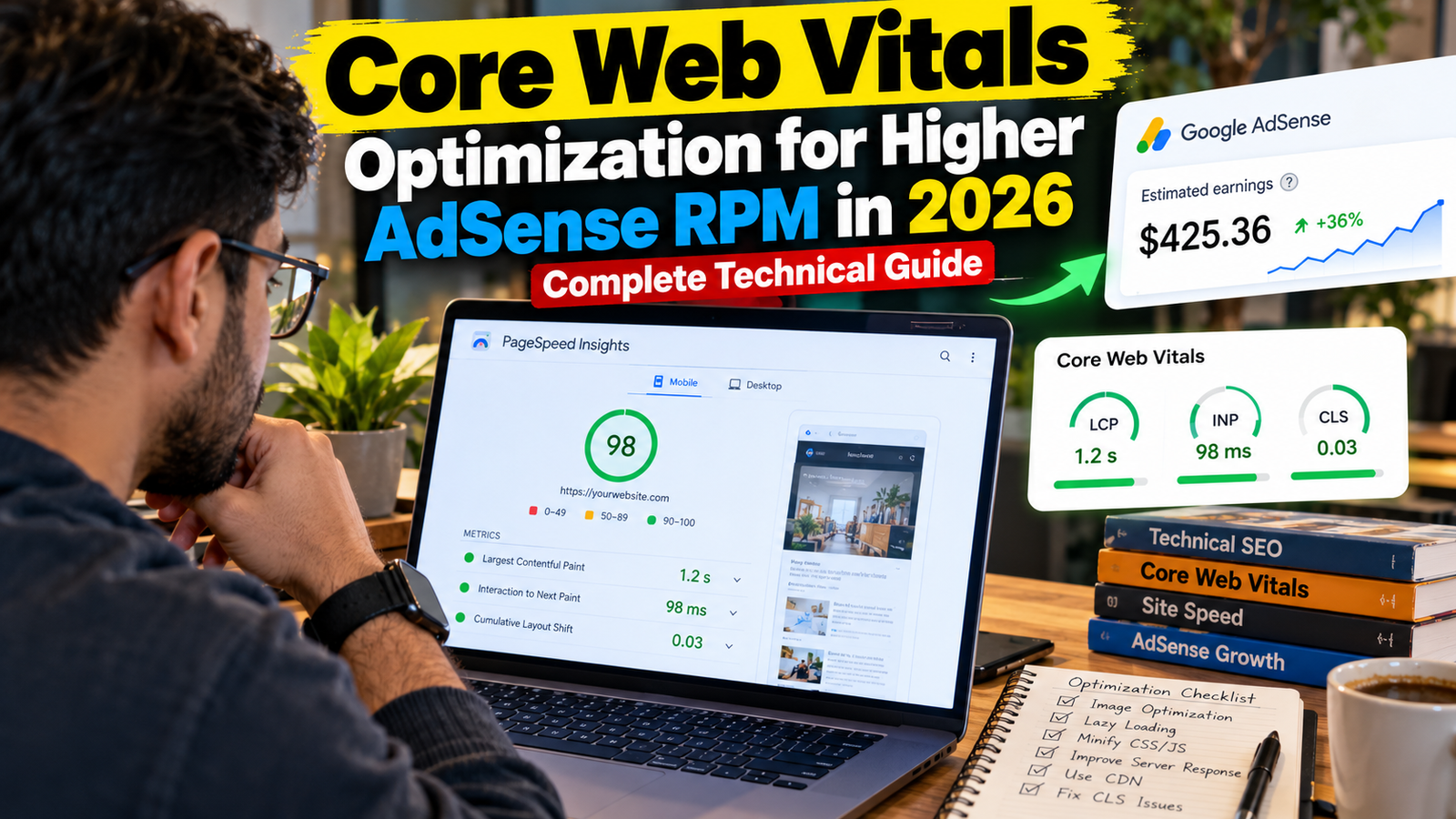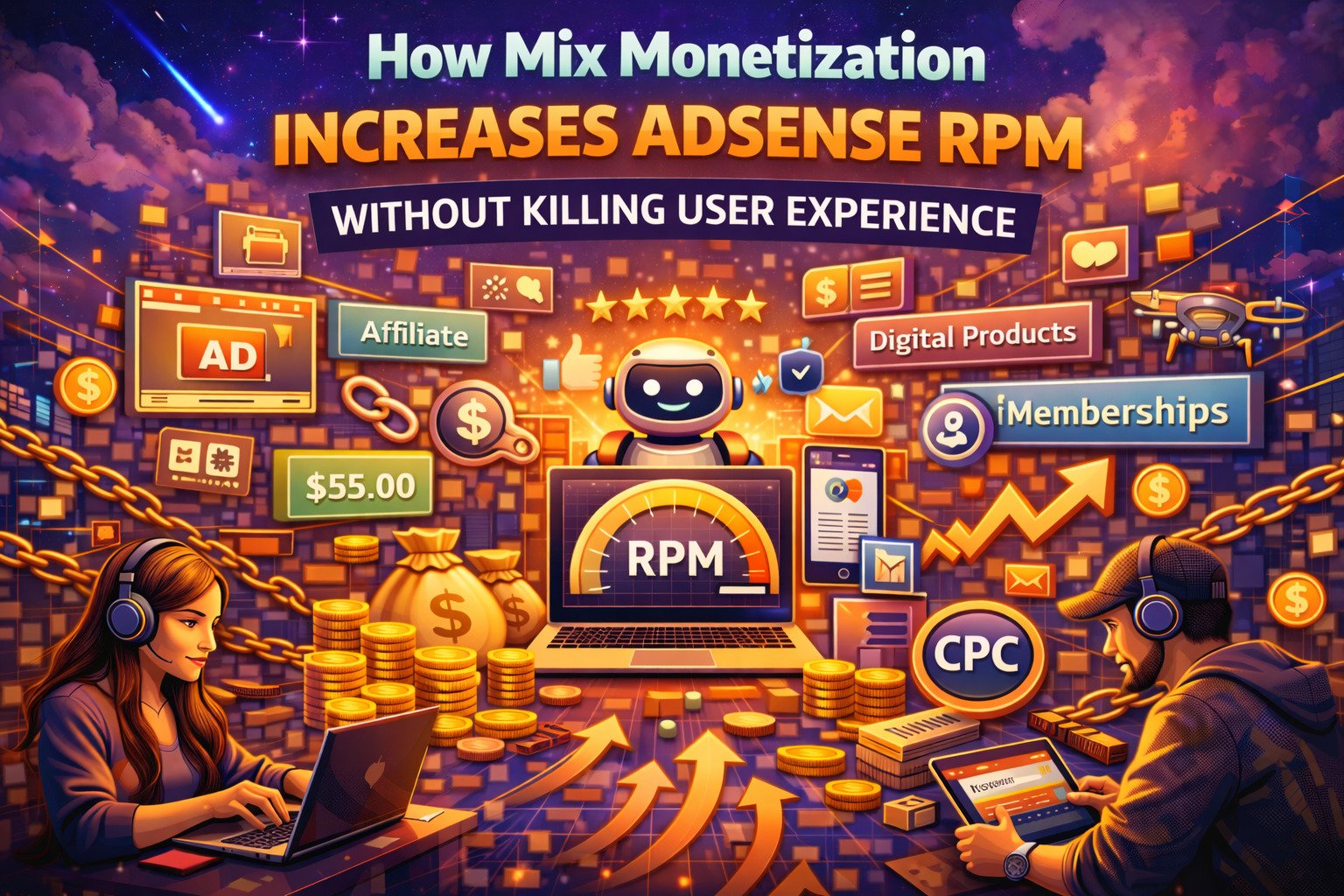
AdSense RPM has become one of the most important performance indicators for publishers, bloggers, and niche website owners. In earlier years, increasing RPM usually meant adding more ads or placing aggressive formats across pages. That approach no longer works. It often damages user experience, increases bounce rates, and can even trigger ad limitations.
In 2026 and beyond, smart publishers are using mix monetization to increase AdSense RPM while keeping websites fast, clean, and user friendly. This strategy focuses on extracting more value from the same traffic instead of pushing visitors away.
This article explains how mix monetization works, why it improves AdSense RPM, and how to implement it without sacrificing trust or usability.
What Mix Monetization Really Means
Mix monetization is the practice of using multiple revenue streams together instead of depending only on AdSense.
Common monetization layers include:
Display ads
Affiliate marketing
Lead generation
Sponsored placements
Email monetization
Digital products
The key is balance. Each monetization method supports the other rather than competing for attention.
When done correctly, AdSense RPM rises naturally because ads are shown to higher intent users in a better environment.
Why AdSense RPM Drops on Overloaded Websites
Many publishers make the same mistake. They add more ads hoping RPM will rise.
In reality, too many ads cause:
Slower page speed
Lower engagement
Higher bounce rates
Reduced session duration
Google uses user experience signals to evaluate ad quality. Poor engagement reduces advertiser demand, which lowers CPC and RPM.
Mix monetization solves this problem by reducing dependency on excessive ad impressions.
How Mix Monetization Improves AdSense Performance
Mix monetization increases AdSense RPM in indirect but powerful ways.
It improves content quality
It attracts higher intent traffic
It increases time on site
It raises advertiser confidence
When visitors stay longer and interact more, Google serves higher paying ads. Advertisers are willing to bid more for engaged users.
Using Fewer Ads for Higher RPM
One of the biggest advantages of mix monetization is that you can reduce the number of ads.
Instead of ten low performing ad units, a site may use:
Three or four premium placements
Better above the fold visibility
Cleaner layout
This improves user experience and increases the value of each ad impression.
Affiliate Links as a Natural Monetization Layer
Affiliate monetization works best when aligned with content intent.
Examples include:
Software recommendations
Tool comparisons
Service reviews
Solution based articles
Affiliate links do not interfere with AdSense. In fact, they improve RPM by monetizing users who would not click ads.
Visitors researching solutions often ignore display ads but convert well on affiliate offers.
Lead Generation and AdSense Synergy
Lead generation is one of the highest RPM monetization methods available.
When visitors submit inquiries or sign up for services, publishers earn fixed payouts. This reduces pressure on ads to generate all revenue.
Pages with lead forms often show higher AdSense RPM because user intent is strong. Advertisers pay more to appear alongside high value content.
Sponsored Content Without User Friction
Sponsored content works when transparency is maintained.
Brands prefer native placements that fit naturally within educational content. When readers trust the website, sponsored sections do not harm experience.
Instead of intrusive banners, contextual sponsorships increase revenue while maintaining credibility.
Email Monetization Boosts Overall RPM
Email lists extend monetization beyond a single visit.
Visitors who leave the site still generate value through:
Affiliate promotions
Sponsored emails
Product offers
This increases lifetime value per visitor. As a result, publishers can afford fewer ads per page while earning more overall.
Content Structure That Protects User Experience
Structure matters more than monetization tools.
High performing pages follow this flow:
Clear introduction
Problem definition
Educational depth
Solution discussion
Soft monetization placement
Ads and links appear naturally after value is delivered. This keeps readers engaged and reduces ad fatigue.
First Party Data and Better Ads
Google increasingly relies on contextual and first party signals.
When content is focused and relevant, AdSense displays ads aligned with user intent. Relevant ads have higher click through rates and CPC.
Mix monetization encourages niche focus, which improves ad targeting and RPM.
Page Speed and Clean Design Still Matter
Monetization fails without performance.
Fast loading pages
Minimal layout shifts
Mobile friendly design
All contribute to better engagement. Better engagement leads to better ad auctions and higher RPM.
Traffic Quality Matters More Than Traffic Volume
Mix monetization works best with quality traffic.
Organic search traffic
Direct visitors
Email subscribers
These users are more valuable than random social traffic. Advertisers pay higher rates when traffic shows buying intent.
Common Mistakes That Hurt RPM and Experience
Adding ads before content
Using unrelated affiliate offers
Popups that block reading
Auto playing videos
Ignoring mobile layout
Removing these issues often improves RPM without adding traffic.
How Google Views User Experience and Ads
Google prioritizes helpful, user focused websites. Sites that balance content and monetization perform better in ad auctions.
Google explains its approach to search quality and user experience here
https://www.google.com/search/howsearchworks
Trust and relevance are rewarded over aggressive monetization.
Long Term Benefits of Mix Monetization
Stable income streams
Lower dependency on AdSense changes
Higher advertiser trust
Better SEO performance
Websites using mix monetization are more resilient to algorithm updates and market shifts.
More Article: Mix Monetization Strategies That Generate Maximum RPM in 2026
Final Thoughts
How mix monetization increases AdSense RPM without killing user experience comes down to one principle.
Monetize intent, not impressions.
When publishers focus on value first and revenue second, RPM rises naturally. Ads perform better, visitors stay longer, and revenue becomes sustainable.
Mix monetization is no longer optional. It is the foundation of profitable publishing in 2026.
Frequently Asked Questions
Can mix monetization really increase AdSense RPM
Yes. Better engagement and higher intent improve ad auction value.
Does affiliate marketing reduce AdSense earnings
No. It often increases total revenue without affecting ad performance.
How many ads should a page have
Only enough to support content. Quality placements outperform quantity.
Is mix monetization safe for AdSense policies
Yes, when implemented transparently and ethically.
How long does it take to see RPM improvement
Most sites see results within four to eight weeks.