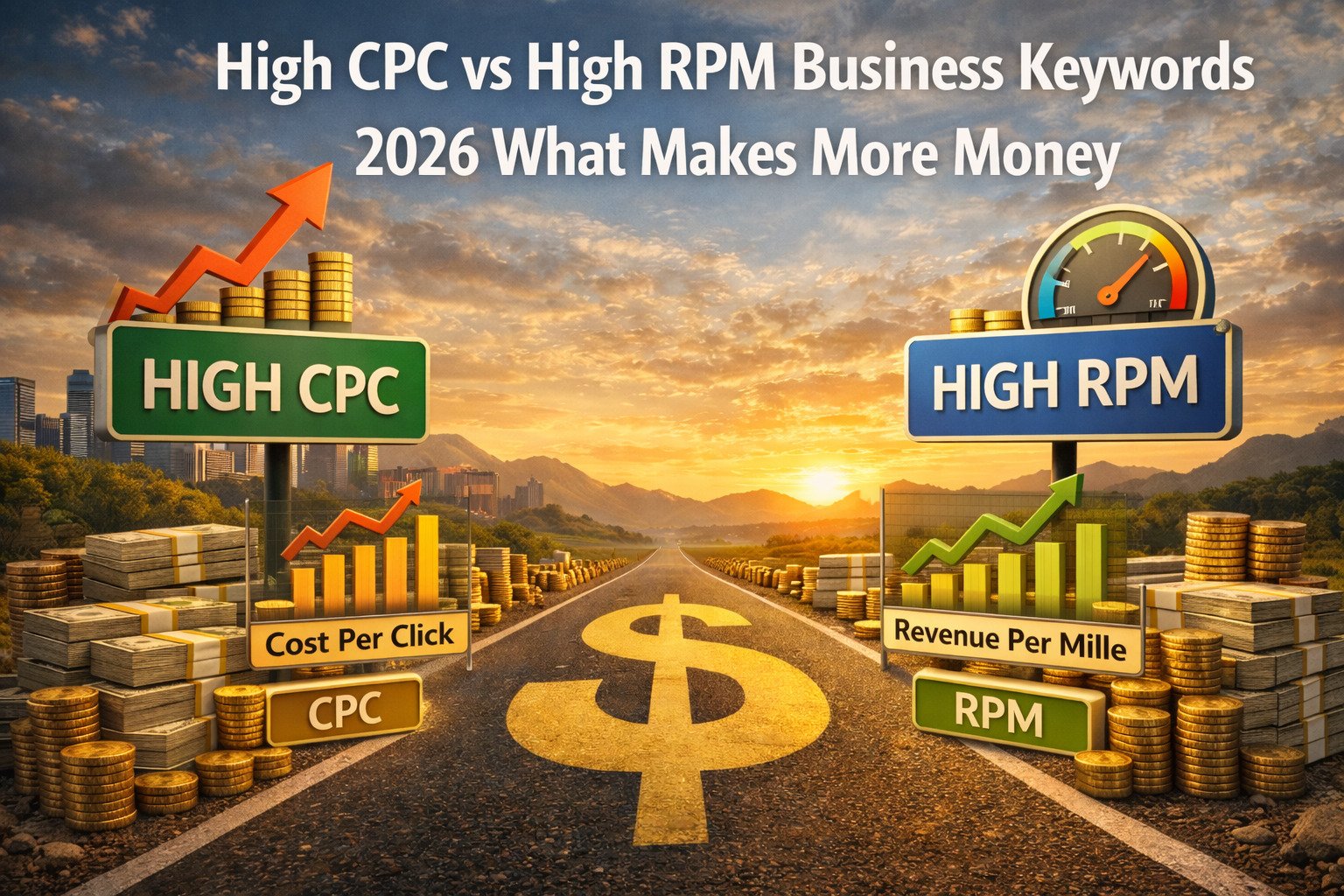
When building a business or making money online website, one question comes up repeatedly. Should you focus on high CPC keywords or high RPM keywords? Both are popular strategies among bloggers, YouTubers, and publishers, but they work in very different ways.
Some creators chase keywords that pay the highest amount per click. Others focus on keywords that generate consistent revenue per thousand impressions. Understanding the difference between high CPC vs high RPM business keywords is essential if you want to build stable, long-term online income.
This article breaks down how each model works, which business keywords perform best, and what actually makes more money in real-world scenarios.
Understanding CPC and RPM in Simple Terms
Before comparing strategies, it is important to clearly understand both concepts.
CPC stands for cost per click. It is the amount an advertiser pays when someone clicks on an ad.
RPM stands for revenue per thousand impressions. It measures how much you earn for every one thousand page views, regardless of clicks.
High CPC keywords can pay very well per click, but they often have lower traffic or fewer clicks. High RPM keywords may pay less per click, but they make up for it with volume, engagement, and advertiser competition.
Why Advertisers Pay High CPC for Business Keywords
Advertisers are willing to pay high CPC when a keyword brings users who are close to making a purchase or business decision.
High CPC business keywords usually:
Target business owners or executives
Relate to expensive products or services
Lead directly to conversions
Have high customer lifetime value
Examples include business loans, legal services, enterprise software, and consulting services. One customer can be worth thousands of dollars, which justifies high bids.
What Makes a Keyword High RPM
High RPM keywords generate strong earnings even if individual clicks are cheaper.
High RPM business keywords usually:
Have large and consistent traffic
Attract multiple competing advertisers
Encourage longer user sessions
Support multiple ad placements
These keywords are often educational or informational, but still connected to monetizable industries like software, marketing, or online business tools.
High CPC Business Keywords Explained
High CPC business keywords focus on transaction-driven searches. These users are often ready to spend money or hire services.
Examples of high CPC business keyword categories:
Business loans and funding
Legal services for companies
Commercial insurance
Enterprise software pricing
Professional consulting services
Even a small amount of traffic can generate significant revenue if clicks convert.
Advantages of High CPC Keywords
High earnings per click
Fewer clicks needed to earn revenue
Strong advertiser demand
Ideal for lead generation websites
Disadvantages of High CPC Keywords
High competition in search results
Lower search volume
Stricter ad policies in some niches
Requires strong trust and authority
Ranking for these keywords often requires well-researched, authoritative content.
High RPM Business Keywords Explained
High RPM business keywords focus on scalable traffic and consistent earnings rather than expensive clicks.
Examples of high RPM business keyword categories:
How to start an online business
Digital marketing strategies
Affiliate marketing guides
Ecommerce growth tips
Online tools and software tutorials
These keywords attract a broader audience and multiple advertisers, increasing overall earnings.
Advantages of High RPM Keywords
Stable long-term traffic
Easier to scale content
Works well with display ads
Lower dependency on single clicks
Disadvantages of High RPM Keywords
Lower earnings per click
Requires higher traffic volume
Revenue grows gradually
Needs consistent publishing
High RPM strategies reward patience and consistency.
High CPC vs High RPM: Which Makes More Money?
The answer depends on your website goals, traffic source, and monetization strategy.
High CPC keywords can make more money per visitor, but only if:
You rank well
Your content builds trust
Users click ads or submit leads
High RPM keywords can make more money overall if:
You generate steady traffic
Users stay longer on pages
Multiple ads are displayed
Content ranks for many related terms
In most real-world cases, websites that rely on only one strategy struggle to scale.
Why the Best Websites Use Both Strategies
Successful business and online income websites combine high CPC and high RPM keywords.
High CPC content brings occasional high-value clicks.
High RPM content brings consistent daily earnings.
This balance creates predictable income while allowing room for growth.
For example:
A website may publish business loan guides targeting high CPC
At the same time, it publishes online business tutorials targeting high RPM
Together, these strategies stabilize earnings.
How to Choose the Right Strategy for Your Website
Ask yourself these questions:
Do you want fast results or long-term growth
Can you compete in high-authority niches
Do you rely on organic traffic or social traffic
Are you monetizing with ads, affiliates, or leads
New websites often benefit more from high RPM keywords because competition is lower and traffic is easier to build. Established websites can leverage high CPC keywords once authority grows.
SEO Tips for Ranking High CPC and High RPM Keywords
Regardless of strategy, ranking depends on quality and relevance.
Focus on long-tail keyword variations
Write in-depth, helpful content
Use clear headings and structure
Answer real user questions
Update content regularly
Avoid keyword stuffing and focus on user experience.
Monetization Differences Between CPC and RPM Keywords
High CPC keywords work best with:
Lead generation
Affiliate offers
Direct service promotion
High RPM keywords work best with:
Display ads
Affiliate links within content
Email list building
Understanding user intent helps you choose the right monetization method.
How Advertisers Influence CPC and RPM in 2025
In 2025, advertisers focus on quality over volume. They analyze user behavior, conversion rates, and engagement metrics.
Platforms like Google Ads show real-time advertiser demand and bidding competition across industries, making them a reliable reference point for understanding keyword value:
https://ads.google.com
This data reflects where businesses are actively spending money.
Common Mistakes to Avoid
Chasing high CPC without authority
Ignoring RPM potential in informational content
Targeting keywords without commercial intent
Overloading pages with ads
Neglecting content updates
Avoiding these mistakes helps protect rankings and revenue.
More Article: Smart Keyword Ideas for Business & Making Money Online Websites
Final Verdict: What Makes More Money?
High CPC keywords can generate impressive earnings with low traffic, but they are harder to rank for and riskier long term.
High RPM keywords generate steadier income, scale better, and support long-term growth.
The most profitable approach is not choosing one over the other, but understanding how to use both together.
When high CPC and high RPM business keywords work side by side, they create a powerful and sustainable online income system.









1 thought on “High CPC vs High RPM Business Keywords: What Makes More Money?”